One of the reasons Yu-Gi-Oh! is so fascinating is the variety of summons that exist. While the normal summon is basic, special summons allow you to bring powerful monsters to the field in creative and strategic ways. If you want to improve your level, mastering each type of summoning is essential. In this guide we explain the main Yu-Gi-Oh! summoning mechanics with clear examples.
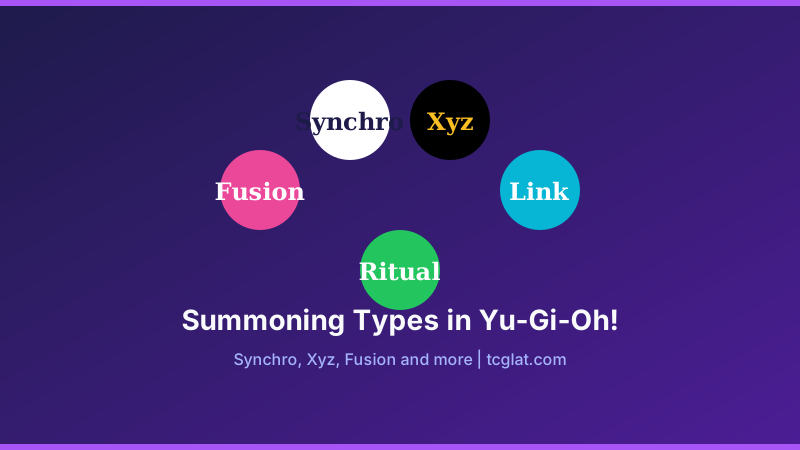
Fusion Summon
Fusion Summoning is one of the oldest. It consists of combining specific fusion materials, normally with the spell card Polymerization, or with monster effects that substitute for it.
How it works:
- You must have the monsters requested by the fusion monster in your hand or field.
- You activate a fusion card like Polymerization.
- You send the materials to the graveyard or banish them, depending on the effect.
- You summon the fusion monster from the Extra Deck.
Iconic monsters like Blue-Eyes Ultimate Dragon or Elemental HERO Flame Wingman are summoned by fusion. It is a powerful mechanic but often requires dedicated cards in the deck.
Synchro Summon
To summon a Synchro monster you need a Tuner monster and one or more non-Tuner monsters. The sum of their levels must match the level of the Synchro monster.
Example:
- You have a level 3 Tuner monster and a level 2 non-Tuner monster.
- The sum is 5, so you can summon a level 5 Synchro monster.
Synchro Summoning was introduced in Yu-Gi-Oh! 5D’s and changed the game forever. Decks like Junk, Synchro, or Stardust are based on this mechanic. It is versatile, powerful, and allows fluid combos.
Xyz Summon
Xyz Summoning uses monsters of the same level as materials. You don’t need a Tuner, just two or more monsters of equal level.
How it works:
- You stack the material monsters on the field.
- You summon the Xyz monster on top of them.
- The materials remain under the Xyz monster and are used to activate its effects.
Xyz monsters have rank instead of level. Some of the best known are Number 39: Utopia or Dark Rebellion Xyz Dragon. This mechanic is very popular for its versatility and power.
Link Summon
Link monsters appeared in Yu-Gi-Oh! VRAINS and revolutionized the game. They are summoned using monsters as materials and are placed in the main monster zone or extra monster zones, depending on the format.
Characteristics:
- They have neither level nor rank, but Link Rating (1 to 4).
- The required materials depend on the conditions written on the card.
- Link monsters point to zones on the field, enabling additional Extra Deck zones.
Link monsters like Linkuriboh or Accesscode Talker are essential in many current competitive decks.
Ritual Summon
Ritual Summoning uses a ritual spell card and a ritual monster. Unlike fusion, synchro, or xyz, ritual monsters are summoned from the hand, not from the Extra Deck.
How it works:
- You must have the ritual monster and the corresponding ritual spell card in your hand.
- You tribute monsters from your hand or field whose total levels equal or exceed the ritual monster’s level.
- You summon the ritual monster to the field.
Monsters like Blue-Eyes Chaos MAX Dragon or Nekroz are representative of this mechanic. Although less common in modern metagames, it remains very viable in specific archetypes.
Pendulum Summon
Pendulum monsters are hybrid cards that work as monsters and as spell cards. They are placed in the Pendulum Zones and allow you to summon multiple monsters from your hand in a single play.
Characteristics:
- They have a pendulum scale that determines which levels you can summon.
- If a Pendulum monster is destroyed, it goes to the Extra Deck instead of the graveyard.
- You can summon several Pendulum monsters at the same time from your hand or Extra Deck.
This mechanic allows massive combos and fields full of monsters, but it is also more complex for beginners.
Contact Summon and other special summons
In addition to the above, there are mechanics such as:
- Contact Summon: some monsters, like Neo-Spacians, are summoned by returning other monsters to the deck.
- Control change summon: effects that take control of the opponent’s monsters.
- Special condition summon: monsters that are summoned by meeting specific requirements written in their text.
Which summon type to choose?
The choice depends on the archetype you play. Some decks specialize in a single mechanic, while others combine several. For example, Swordsoul decks use Synchro, Drytron decks use Ritual, and Tri-Brigade decks use Link.
The most important thing is to understand the conditions of each summon and practice them until they become automatic. Over time, you will be able to read a card and instantly know how and when to summon it.
Conclusion
Yu-Gi-Oh! offers a wide variety of summons that make each game different. From the classic fusion to the modern Link Summon, each mechanic brings its own style and depth. Mastering them not only improves your game, but also allows you to enjoy much more the strategy behind each card.
At tcglat we will continue publishing advanced Yu-Gi-Oh! guides, archetype strategies, and metagame analyses. Keep practicing and you will see how you improve!