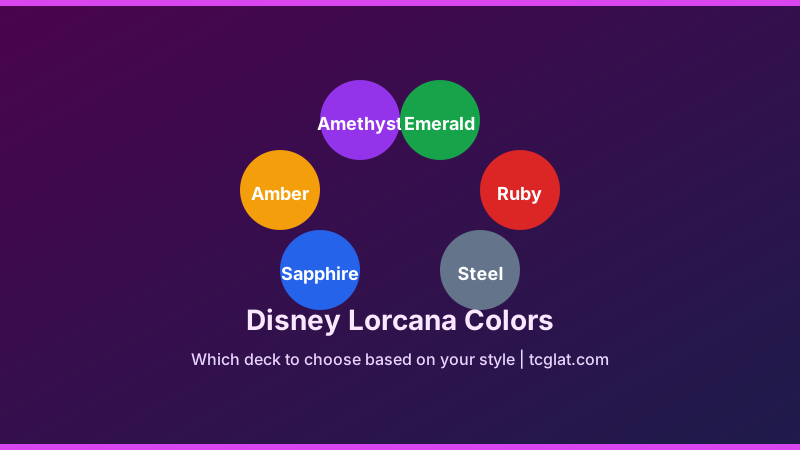
One of the most important decisions when building a deck in Disney Lorcana is choosing the colors. Each one offers a clear identity, unique mechanics, and iconic characters. Understanding what makes each color special will allow you to create a deck that fits your playstyle. In this article we analyze the six colors of Lorcana and the most popular combinations.
Amber: the color of support
Amber is the color of solidarity, support, and healing. Its characters often have abilities that help other characters, recover lore, or protect the board. It is an excellent color for players who prefer to build resilient boards and keep their characters alive.
Strengths:
- Healing and protection of characters.
- Support abilities that empower allies.
- Durable midrange strategies.
Weaknesses:
- Can be slow to close out games.
- Depends on keeping characters on the board.
Characters like Ariel and Belle represent the virtues of Amber well.
Amethyst: the color of control
Amethyst represents magic, mystery, and manipulation. Its cards allow you to draw, discard, return cards to the deck, and control the pace of the game. It is ideal for players who enjoy thinking several moves ahead and frustrating the opponent’s plans.
Strengths:
- Great card advantage and resource control.
- Ability to remove threats without direct combat.
- Flexible and adaptable strategies.
Weaknesses:
- Can be vulnerable to very aggressive decks.
- Requires good hand and ink management.
Mickey Mouse and Maleficent are iconic representatives of Amethyst.
Emerald: the color of cunning
Emerald is the color of evasion, combos, and clever play. Its characters often have evasion abilities, card draw, and effects that surprise the opponent. It is a fun color for those who enjoy creativity and non-linear combos.
Strengths:
- Characters that are difficult to remove.
- Combos and evasion effects.
- Ability to generate unexpected advantage.
Weaknesses:
- Can lack direct power.
- Some combos depend on specific conditions.
Aladdin and Peter Pan fit perfectly in Emerald.
Ruby: the color of aggression
Ruby is the color of fire, direct action, and damage. Its characters are aggressive, with high strength and abilities oriented toward challenging and eliminating opponents. It is ideal for players who want to apply pressure from the first turn and close games quickly.
Strengths:
- High damage and constant pressure.
- Very effective challenge abilities.
- Fast game closure.
Weaknesses:
- Can run out of resources if the opponent resists.
- Less defense and control than other colors.
Gaston and Scar represent the most aggressive side of Ruby.
Sapphire: the color of knowledge
Sapphire is the color of intellect, strategy, and resource advantage. Its cards allow you to draw cards, control ink, and accumulate lore steadily. It is ideal for players who prefer a calculated, resource-based game.
Strengths:
- Excellent card draw and ink generation.
- Control of the opponent’s resources.
- Long-term value strategies.
Weaknesses:
- Can be slow against aggressive decks.
- Requires protecting the characters that generate lore.
Elsa and Merlin are representative figures of Sapphire.
Steel: the color of defense
Steel is the color of resilience, armor, and defense. Its characters are the most resilient in the game, with high willpower and abilities that make the opponent’s challenges difficult. It is perfect for players who prefer to build impenetrable walls.
Strengths:
- Characters with high resistance and willpower.
- Defensive and protective abilities.
- Stall and board control strategies.
Weaknesses:
- Can lack speed to generate lore.
- Some characters are expensive to play.
Beast and Hercules embody the strength of Steel.
Popular combinations
Most competitive decks combine two colors. Some of the most popular combinations are:
- Amber-Amethyst: control and support, ideal for long games.
- Ruby-Emerald: aggression with evasion and direct damage.
- Sapphire-Steel: value and defense, difficult to break.
- Amethyst-Ruby: aggressive control that combines removal with pressure.
- Emerald-Steel: cunning and resilience for tactical games.
Which color should you choose?
Your choice should depend on your playstyle:
- You prefer to help and protect: Amber.
- You enjoy control and manipulation: Amethyst.
- You like combos and evasion: Emerald.
- You want to pressure and win quickly: Ruby.
- You like planning and advantage: Sapphire.
- You prefer defense and resilience: Steel.
Conclusion
The six colors of Disney Lorcana offer a wide variety of styles. There is no better color, only colors that adapt better to your way of playing. Try different combinations, see which one feels most natural, and have fun building deck after deck.
At tcglat we will continue analyzing combinations, meta decks, and Lorcana strategies. Choose your colors and start playing!